Picada Café · Southern Brazil
The factory
Made in Picada Café, in the green mountains of southern Brazil.
The family workshop was here before Nordweg. Today, Iuri manages the factory and the team makes the products in the same town where his parents began. These photographs follow the work on our Legacy collection.

The place we come from
The place we make things
Picada Café is in the Serra Gaúcha, a mountain region in Rio Grande do Sul. Shoemaking and leatherwork have been part of the area’s economy for generations.
The first family workshop began in a grandmother’s garage. It grew into Emme and later became dedicated to Nordweg. The brand’s Brazilian headquarters and store are nearby in Nova Petrópolis.

Drawings and patterns
A design becomes a pattern
Drawings, paper patterns, and cut leather sit together on the workshop table. The pattern breaks the design into pieces that can be made and joined.
Panels, straps, handles, and pockets need to work together in a bag that will be opened, carried, and used every day. Design and making meet at this bench.

The parts
Before the pieces come together
Laid out at the bench, the leather components and hardware show how much belongs inside one finished object.
The shape of a handle, the meeting of two panels, and the edges around a strap are small parts of the design that become familiar in use.

Hands and tools
Work that takes practice
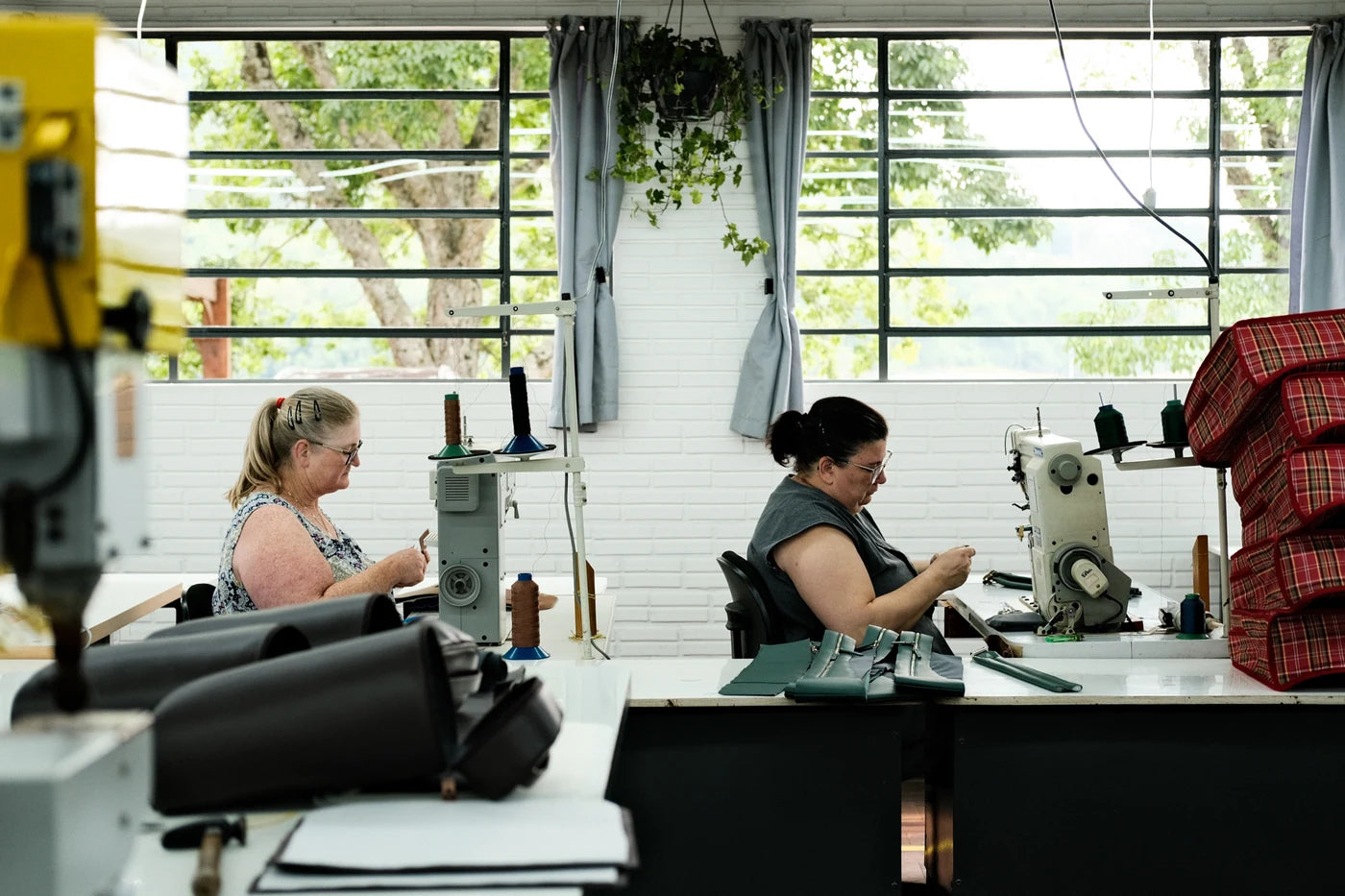
This moment shows handwork on a leather component. Elsewhere in the workshop, makers work at cutting tables and sewing machines.
The equipment is part of the factory. So is the accumulated knowledge of the people using it: how to hold a piece, work an edge, and notice when something needs another look.

Finishing
The edge your hand meets
A maker applies finish along the edge of a leather component. It is a small detail, and one you feel when you handle the bag.
Cutting, stitching, finishing, and inspection all contribute to what leaves the workshop.

The mark
Putting our name to it
The Legacy mark is pressed into the leather. It belongs to the object, and to the people and company standing behind the work.


Before it leaves
Before it leaves the workshop
A maker finishes a Legacy certificate at the table. The stitching and finish are inspected before a bag leaves Picada Café.
The relationship continues when someone begins using it. Care and current U.S. support information are available through Nordweg.
